A wrapped work vehicle is the least expensive advertising most trades will ever buy. It is already on the road, already parked outside customers' homes, and unlike any other medium it costs nothing per impression after the initial fit.
Good vehicle graphics start with an accurate template for the exact year, make and model — not a generic van outline. Artwork is designed around door seams, handles, body swages and window lines so that critical information does not disappear into a recess or get cut in half by a hinge.
Options
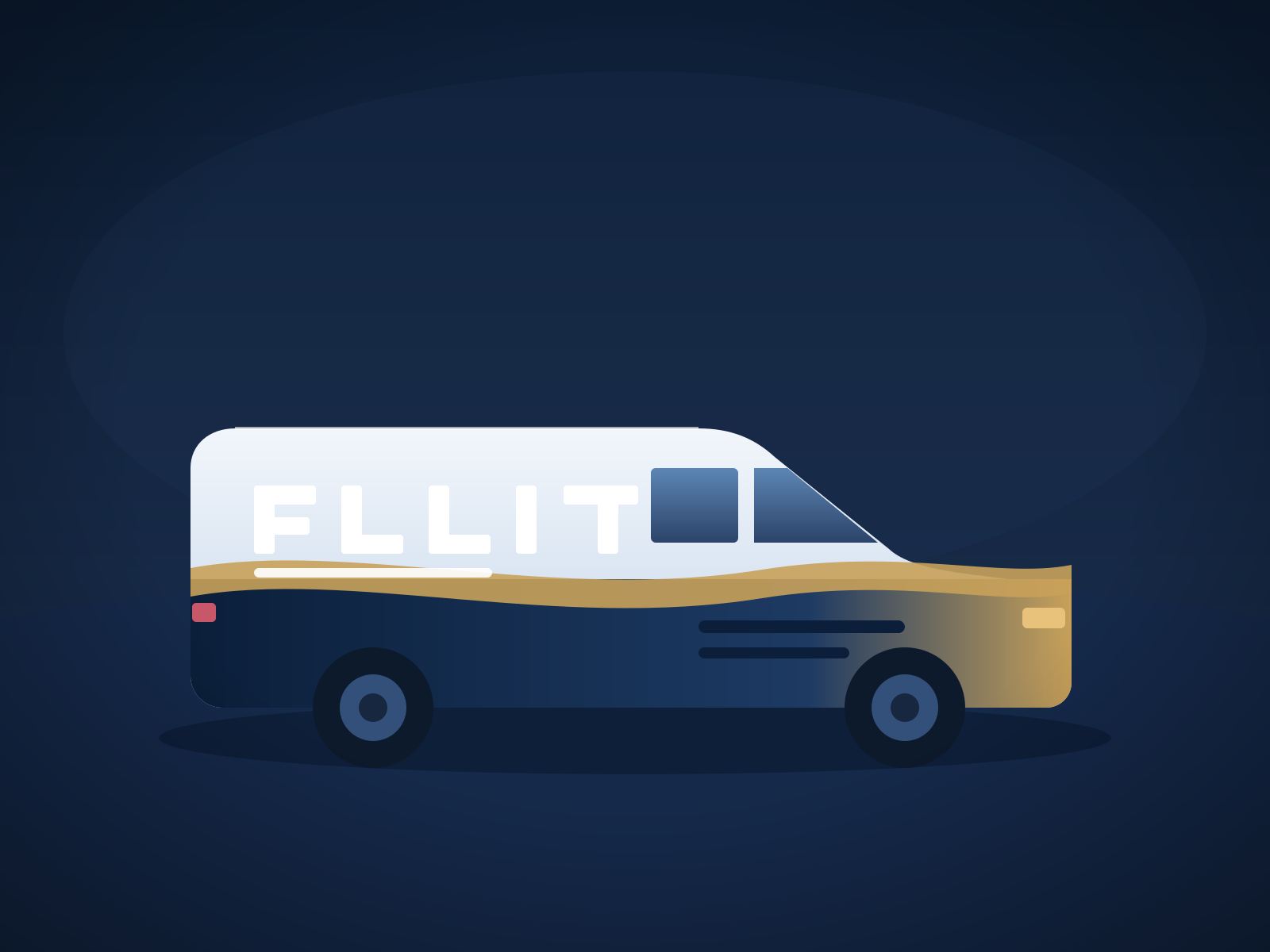
Cut vinyl lettering is the economical route: logo, phone number and services applied directly to the paintwork. A partial wrap covers roughly a third of the vehicle, usually the lower body and rear doors, and gives most of the impact of a full wrap for around half the cost. A full wrap covers all painted surfaces, allows photographic artwork and colour changes, and protects the original paint underneath.
Applications
- Trades and service vans
- Multi-vehicle fleets requiring consistent livery
- Box trucks, trailers and equipment
- Company cars and mobile offices
- Food trucks and mobile retail
Benefits of vehicle graphics
The lowest cost per impression
A single wrapped van generates a very high volume of local impressions annually for a one-off cost with no ongoing spend.
Protects the paint underneath
Cast wrap film shields the original paintwork from stone chips and UV, which helps resale or lease return condition.
Designed to the actual body
Model-specific templates mean copy sits in flat, readable areas rather than disappearing into a swage line or door handle.
Consistent across a fleet
Artwork is scaled per model so every vehicle reads as the same livery, whatever the size or shape.
Vehicle Graphics — recent work


Common questions
If your question is not answered here, get in touch — we are happy to talk through the detail.
Quote vehicle graphics
Tell us the year, make and model, and whether you want lettering, a partial or a full wrap. Photos of the vehicle help.