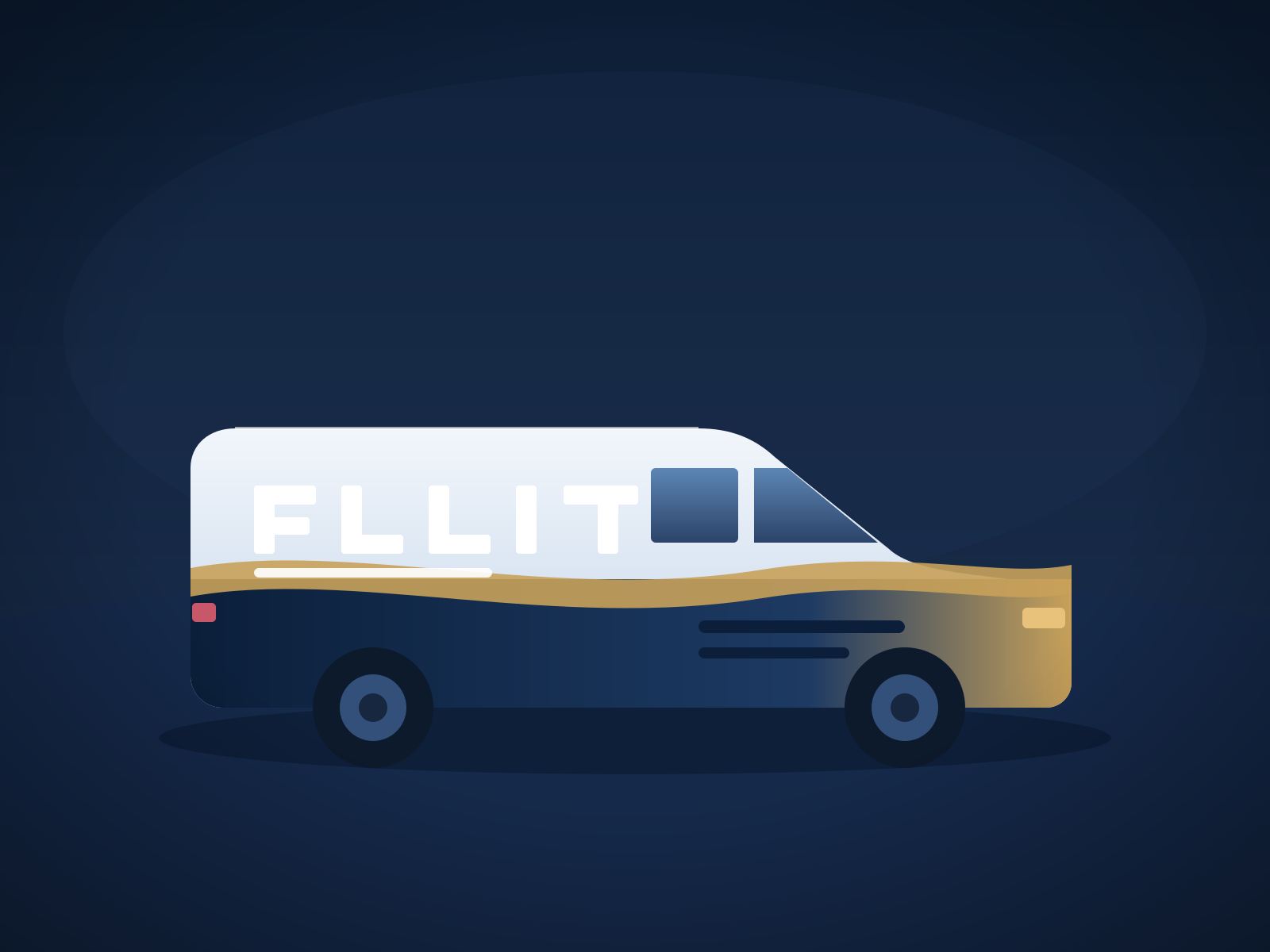
If you already own the vehicle, already pay the insurance and already drive it to jobs, then graphics on the side are close to the cheapest advertising available to a local business. The vehicle is going to make those trips regardless.
The economics
Every other advertising channel charges you per impression, per click or per month, forever. Vehicle graphics are a one-time cost that keeps working for five to seven years with no ongoing spend.
A work van in regular local service generates a very high volume of impressions annually — and critically, they are geographically targeted impressions. The van is being seen in the neighbourhoods you actually serve, by people who live there, often parked directly outside a job you are doing for their neighbour.
That last point matters more than raw impression counts. A wrapped van parked outside a house being worked on is a live testimonial.
Design mistakes that waste the investment
Too much information. A driver has a couple of seconds. Company name, what you do, and one contact method. That is genuinely it. Service lists, three phone numbers, a QR code and social handles produce a vehicle nobody can read.
Copy in the wrong place. This is the mistake proper templating prevents. Phone numbers positioned across a door handle, a body swage or a hinge line become unreadable. Model-specific templates keep critical information on flat, visible panels.
Poor contrast. A dark logo on a dark wrap disappears at distance. The rear doors especially — that is what the driver behind you at a red light is looking at.
Forgetting the back. In traffic, the rear of your vehicle gets the longest sustained viewing of any surface. It deserves your clearest, largest contact information.
Full, partial, or lettering?
Cut lettering is the economical entry point — logo, phone and services applied directly to the paint. On a white or light-coloured van it looks clean and professional and costs a fraction of a wrap.
Partial wrap covers roughly a third of the vehicle, usually the lower body and rear. It delivers most of the visual impact of a full wrap for around half the cost, and is the sweet spot for most trades.
Full wrap covers all painted surfaces. Choose it when you want photographic imagery, a colour change, or maximum impact — and when you want the paint underneath protected for resale or lease return.
Fleet consistency
If you run more than two vehicles, design the livery as a system rather than per-vehicle. Artwork scaled correctly for each model means a compact van and a long-wheelbase high-roof read as the same brand, rather than as two businesses that happen to share a colour.
Retrofitting consistency across a mismatched fleet is one of the most common jobs we do, and it is always more expensive than getting it right at the start.
Practical expectations
- Lifespan: five to seven years on quality cast film, hand-washed and not permanently parked in full sun.
- Downtime: a day for lettering, two to three for a full wrap.
- Paint safety: no risk on sound factory paint. Aftermarket respray work is a genuine risk on removal, and we will flag it if we see it.
- Care: hand wash. Avoid pressure washing the edges directly and skip automated brush washes.